Kitchen Exhaust Cleaning in London, Ontario
Kitchen Exhaust Cleaning in London is the cleaning of the grease duct that carries air from the hood collar to the roof: the horizontal run above the ceiling, the vertical riser through the building, and the access panels cut into both. Hood Cleaning London opens the duct at each panel, scrapes and degreases every section, and checks the grease depth against the NFPA 96 limit of 0.078 inches from collar to roof. Each section is photographed and named on a signed certificate referencing the published NFPA 96 standard.
Kitchen exhaust cleaning services in London: run, riser and access panels
The horizontal run leaves the hood collar and travels above the ceiling tiles until it finds a way up. Grease-laden air cools as it travels, so grease condenses along the bottom of the run and pools at every elbow. In an Old East Village storefront the run can cross most of the building before it turns.
The riser is the vertical shaft from the top of the run to the roof curb. In a one-storey unit it is a short stack. In a two- or three-storey building downtown it passes through floors above the kitchen, and a fire inside it spreads to rooms that have nothing to do with the restaurant.
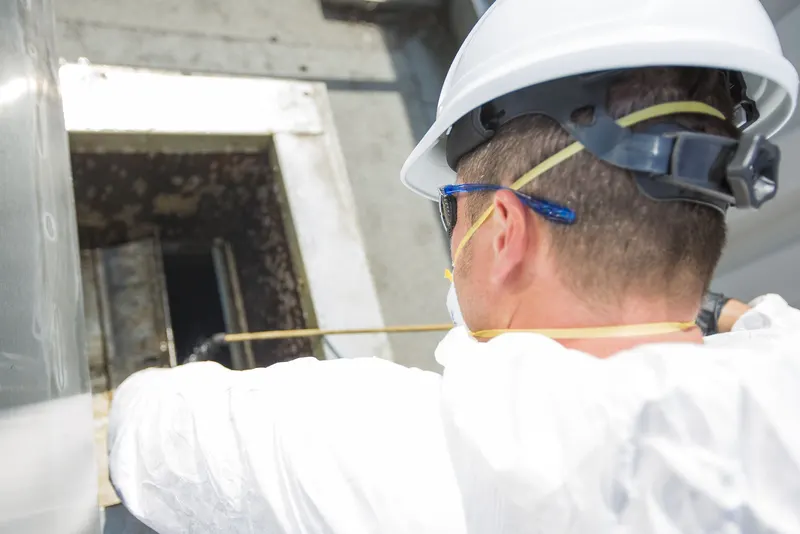
Access panels are bolted, gasketed doors in the duct wall. A run with too few panels leaves sections nobody can reach, and those sections never get cleaned. The walk-through maps every panel and flags any stretch that needs one added. The canopy and filters themselves are on the hood cleaning services page.
Hood vent cleaning in London: the 0.078 inch reading along the whole path
Hood vent cleaning in London means following the grease past the hood and into the vent it feeds. NFPA 96 sets 0.078 inches (2000 micrometres) as the acceptable grease depth. That limit applies to the whole path, not only to the parts a manager can see from the line.
A depth reading is taken before cleaning at the collar, at each elbow, along the floor of the horizontal run, at the base of the riser and at the top of it. The base of the riser and the first elbow are usually the worst, because grease running back down collects there. The same points are read again after cleaning and photographed, so the certificate shows each section went back under the limit.
The path ends at the rooftop fan. Fan belts, bearings and hinge kits are covered on the exhaust fan repair and installation page.
Commercial kitchen exhaust cleaning in a plaza with a shared riser
Many strip plazas on Wellington Road and Wonderland Road put two or three food tenants on one riser. A tandoor restaurant, a fried-chicken counter and a pizzeria can all feed the same shaft, each through its own run.
A shared riser changes the job in three ways. The heaviest grease in the riser may come from the unit next door, so cleaning one tenant's run while the riser stays dirty leaves the fire risk in place. Access often means keys to other units or to a locked roof hatch, which the plaza manager has to arrange. The certificate has to say which runs and which riser sections were cleaned, so each tenant and the landlord can see where their responsibility ends.
The walk-through for a plaza unit traces the run back to the riser and notes every other tenant tied into it. Shared-riser systems are quoted on site, and a coordinated overnight visit for all tenants on the same riser is the simplest way to get the whole shaft cleaned in one night.
Hood-only vs full-system kitchen exhaust duct cleaning in London
| Part of the system | Hood-only clean vs full-system clean |
|---|---|
| Hood assembly | Cleaned in both. |
| Horizontal run and elbows | Hood-only: left as found. Full-system: opened at each panel and cleaned. |
| Riser to the roof curb | Hood-only: not touched. Full-system: cleaned from top and bottom. |
| Grease depth readings | Hood-only: at the collar only. Full-system: every section, before and after. |
| What the certificate can state | Hood-only: the hood. Full-system: the whole path from collar to roof, section by section. |
What London Fire Department and the Ontario Fire Code expect is on the NFPA 96 page.
Where to find kitchen exhaust duct cleaning near me in London
Hood Cleaning London cleans exhaust systems across London and on route days through Middlesex, Elgin and Oxford.
Downtown and Richmond Row buildings often have multi-storey risers. Wellington Road and Wonderland Road plazas have the shared ones. West on Highway 402, Legion hall kitchens in Strathroy often have a short run that has not been opened in years. East on Highway 401, restaurant lines in Woodstock and Ingersoll answer to Southwestern Public Health, while London and Strathroy kitchens answer to the Middlesex-London Health Unit. The rest of the coverage is on the areas served page.
How much does kitchen exhaust cleaning cost in London in 2026?
Kitchen exhaust cleaning in London costs from $585 per visit for a single-hood kitchen up to ten feet, and from $995 per visit for a multi-hood kitchen of two to four canopies. Larger and shared-riser systems are quoted on site after a free walk-through, and the written quote comes back within 24 hours.
Duct length, the number of elbows, the height of the riser and the number of access panels set the hours. If a section has no panel, the quote lists the panel as a separate item. WSIB and liability insurance papers are sent before the crew arrives.
Next step: call 226-457-6745 or book a free walk-through. Mention whether the building is one storey or more, and whether other tenants share the riser. All services are listed on the commercial cleaning services page.
Kitchen exhaust cleaning in London: frequently asked questions
Is hood vent cleaning the same as kitchen exhaust cleaning?
Hood vent cleaning is the common name for the same work: cleaning the duct that leaves the hood, through the ceiling and up to the roof. Kitchen exhaust cleaning is the trade term for that whole path.
How is grease depth checked inside the duct?
A depth gauge is pressed into the grease at the collar, each elbow, the horizontal run and both ends of the riser. Any reading above 0.078 inches is over the NFPA 96 limit, and every reading is photographed.
What happens if my plaza unit shares a riser with other restaurants?
A shared riser is quoted after a walk-through that traces every tenant tied into it. The cleanest result comes from one overnight visit for the whole riser, arranged with the plaza manager for roof and unit access.
Why would a duct need new access panels?
Access panels are the only way into a section of duct. A long run or an elbow with no panel cannot be cleaned or measured, so the quote adds a panel as its own line.
Does kitchen exhaust cleaning disrupt service?
Kitchen exhaust cleaning is scheduled overnight or between services. The kitchen is covered and protected before the ducts are opened, and it is left ready for the next shift.